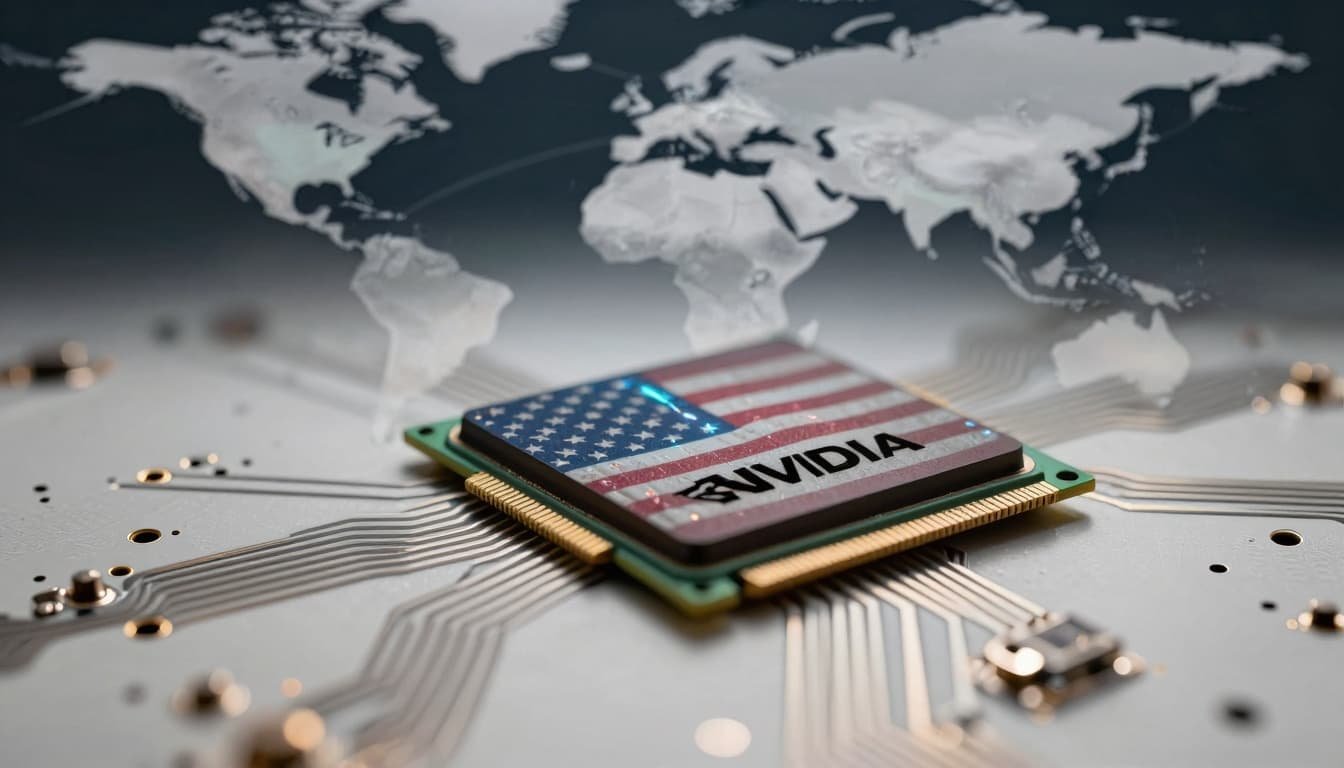
Nvidia CEO Jensen Huang has become one of the most important voices in the global AI race. When he speaks about export controls, China, and regulation, markets listen. His recent meeting with former President Donald Trump and his comments on new AI rules show how tense the balance is between national security and business growth.
Lawmakers in the United States are pushing for tighter limits on advanced AI chips that can be sold to countries like China. At the same time, tech leaders like Huang are warning that some proposals could hurt the very companies that keep the US ahead in AI.
Why Nvidia Is in the Middle of the AI Policy Fight
Nvidia designs the graphics processing units (GPUs) that power modern AI systems. These chips run large language models, image generators, and advanced tools used by companies and governments worldwide. Because of this, Nvidia is a key player in both the tech industry and in national security debates.
US officials worry that if China and other rivals gain easy access to the most powerful AI chips, they could use them to build military, cyber, and surveillance tools that threaten US interests. So Washington has already placed export limits on some of the highest performance chips.
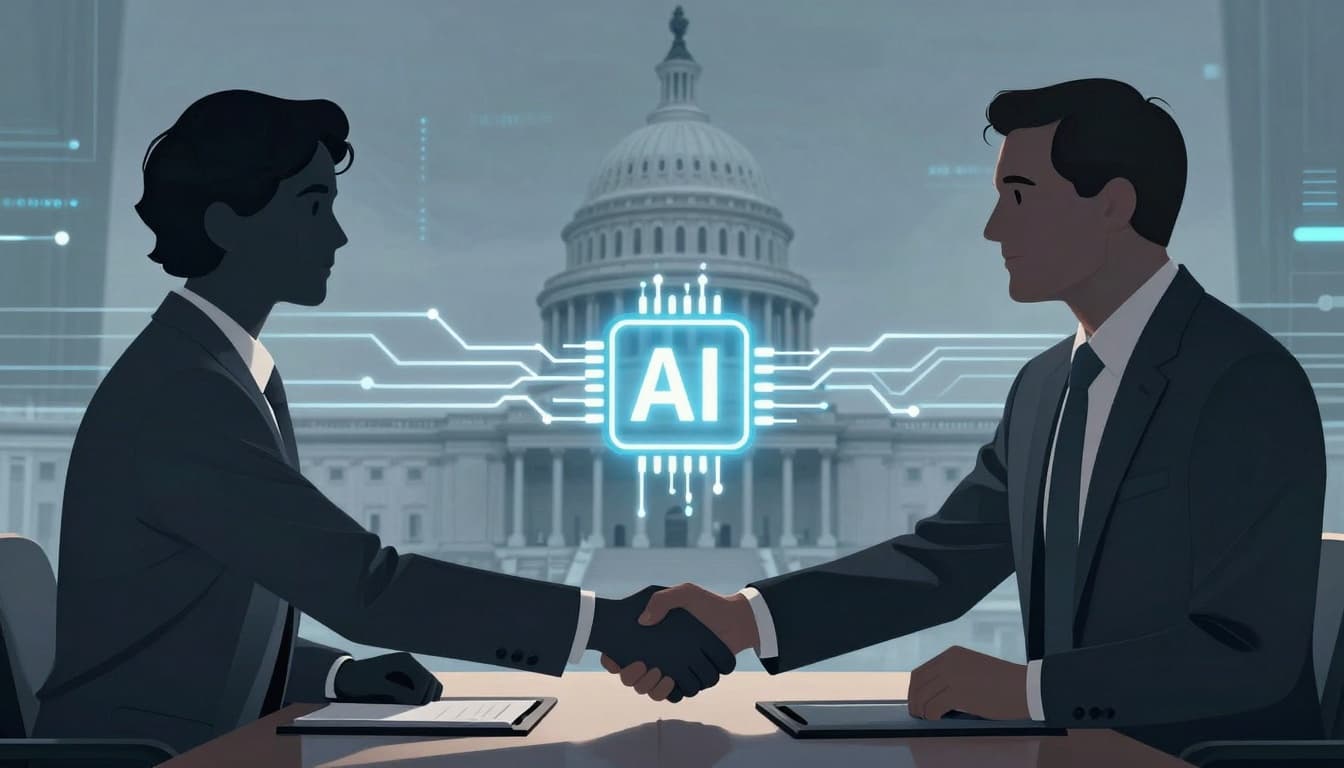
Huang has said that Nvidia supports export controls in general. But he argues that they must be crafted carefully so that US companies can still innovate and sell enough products to fund future research.
The GAIN AI Act and Why Huang Criticized It
One recent proposal in Washington is called the Guaranteeing Access and Innovation for National Artificial Intelligence Act, or GAIN AI Act. The idea is to make sure that US companies get first access to the most advanced AI chips before they are sold to buyers in nations like China.
Supporters say this would put American customers at the front of the line and keep more cutting-edge hardware inside the United States. But critics, including Huang, worry that the rules could go too far, slow sales, and weaken US chipmakers over time.
Huang reportedly called it “wise” that lawmakers are not including the GAIN AI Act in a major defense bill right now. He even suggested the measure could be more harmful than other AI regulation ideas being discussed in Congress.
From his view, harsh limits on where and how Nvidia can sell its products might help foreign rivals catch up. If US companies make less money, they have fewer resources to design the next generation of AI hardware.
Nvidia’s Global AI Demand Problem
Nvidia’s chips are in huge demand across the world. Tech giants, startups, and research labs want them for everything from cloud AI services to robotics and healthcare tools.
China, in particular, is a major market. While Nvidia follows all US export rules, it still wants to serve that demand as much as possible within the law. Each new restriction on exports forces the company to redesign products and rethink its global strategy.
This is where policy and profit collide. The US government wants to slow AI progress in rival nations. Nvidia wants to keep growing and shipping chips worldwide. Huang’s comments highlight how tricky it is to strike the right balance.
Huang’s Push for a Single Federal AI Standard
Beyond exports, Huang also spoke out against the idea of separate AI rules in each US state. Several states are already exploring their own AI laws, and there is a growing debate over privacy, bias, safety, and transparency for AI systems.
Tech leaders worry that a patchwork of state regulations would create confusion and heavy costs. A company might have to follow one set of rules in California, another in Texas, and a third in New York, all at the same time.
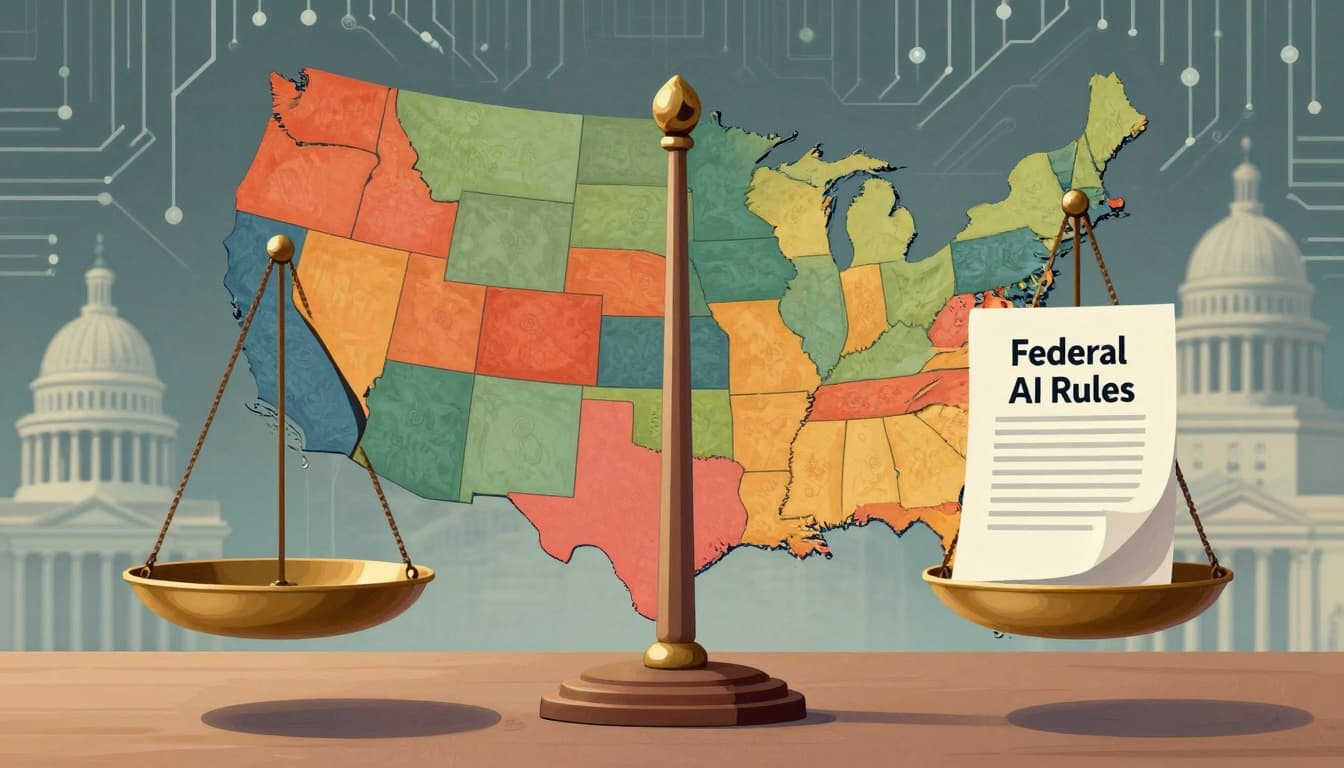
Huang warned that state-by-state AI regulation could “drag the industry to a halt.” He also framed it as a national security issue. In his view, if the US wants to stay ahead in AI, it needs clear, unified rules that let innovation move quickly, not a maze of overlapping laws.
He argued that a single federal AI framework would be “the wisest” approach. This would still allow for strong protections, but in a way that is consistent across the country.
Trump’s Role in the AI Regulation Debate
Former President Trump has also weighed in on AI rules. He has called for a federal standard that would override many state-level AI laws. That stance lines up with what Huang and other tech leaders are asking for: one main rulebook instead of 50 different versions.
However, building political support for a broad federal AI law is not easy. Some lawmakers want strong state powers to protect local interests. Others fear that a single federal standard could be either too weak or too strict, depending on who writes it.
Recent signs from Congress show that full preemption of state AI laws may not be included in key bills, at least for now. That means the tug-of-war between state and federal control over AI will likely continue.
What This Means for AI, Investors, and Creators
For investors watching Nvidia and other chipmakers, these policy debates are more than background noise. Export rules can shape how much revenue companies earn from key markets. Regulation can also change how fast AI tools get adopted in sectors like finance, healthcare, and media.
For AI builders, content creators, and startups, the stakes are also high. Confusing or strict rules in one state could push projects to other regions or to other countries. Clear national standards could help people plan products and business models with more confidence.
Huang’s comments show how closely the tech industry is watching lawmakers. Companies want rules that protect security and privacy, but they also need space to experiment and move fast.
Looking Ahead: Balancing Security and Speed
The fight over AI chip controls and regulation is not going away. As AI systems grow more powerful, more countries will try to control who can access the best hardware. At the same time, voters and consumers will demand stronger guardrails on how AI is used.
Nvidia, as one of the winners of the AI boom, will stay in the spotlight. Its CEO will keep walking a fine line: working with governments, protecting business interests, and trying to keep US innovation ahead of global rivals.
The message from Huang is clear. The US must protect its lead in AI, but it must do so in a way that does not slow its own companies down. How Washington responds will shape not only Nvidia’s future, but the future of AI worldwide.
To contact us click Here .