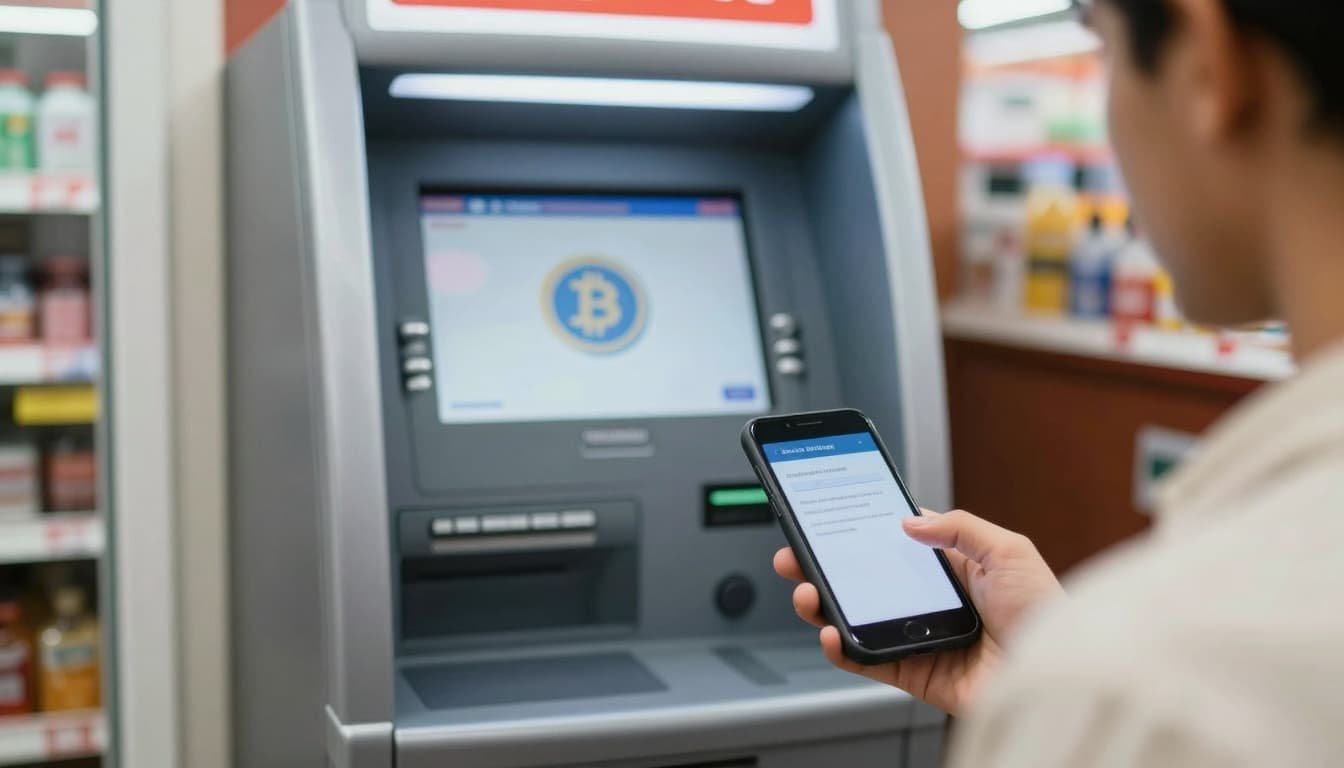
Bitcoin ATMs are popping up across the U.S., and many people use them for simple cash-to-crypto transactions. But the same speed and convenience that makes these kiosks easy to use also makes them attractive to scammers.
According to new FBI data reported by ABC News, fraudsters in 2025 stole more than $333 million from Americans through scams involving bitcoin ATMs (also called cryptocurrency kiosks). The FBI says the trend shows a steady rise that is not slowing down.
This matters because once money is sent through a crypto transaction, it can be very hard (and often impossible) to recover. That is why scammers love pushing victims toward crypto payments.
What the FBI numbers show
The FBI statistics referenced by ABC News track fraudulent transactions using cryptocurrency kiosks. The losses have grown quickly:
- 2024: roughly $250 million in losses from bitcoin ATM scams, according to the FBI.
- 2025 (Jan through Nov): about $333.5 million in reported losses.
The FBI described it as a “clear and constant rise.” That is a big warning sign because it suggests the problem is not limited to a few isolated cases. It is becoming a repeatable scam playbook.
Why bitcoin ATMs are a favorite tool for scammers
ABC News notes there are more than 45,000 bitcoin ATMs nationwide. These machines let a user insert cash and send it to a digital wallet anywhere in the world, often in just minutes.
That is useful for legitimate users, but it also creates the perfect setup for fraud:
- Fast transfers: once a transaction goes through, the money moves quickly.
- Hard to recover: experts say funds can be nearly impossible to get back after the transfer.
- Distance does not matter: crypto can be sent to a wallet anywhere, including overseas.
- High pressure works: scammers can keep a victim on the phone while the transaction happens.
Amy Nofziger, AARP’s director of fraud victim support, told ABC News in a previous interview that requesting crypto has become the No. 1 preferred method for criminals.
How bitcoin ATM scams usually work (common scripts)
Bitcoin ATM scams often follow a simple pattern. The scammer creates fear, urgency, and confusion, then gives the victim “steps” to fix the problem. Those steps lead straight to a bitcoin ATM.
Here are common versions of the scam:
- Fake government call: someone claims to be from law enforcement, the IRS, or another agency and says you must pay immediately.
- Bank fraud alert scam: a caller says your account is compromised and instructs you to “secure” your money by converting it to crypto.
- Tech support scam: a pop-up or call claims your device has a virus and demands payment to fix it.
- Family emergency scam: a scammer pretends to be (or to represent) a relative who needs urgent money.
In many cases, the scammer stays on the phone while the victim drives to a kiosk, deposits cash, and sends crypto to a wallet address the scammer controls. Once it is sent, it is often gone for good.
Who is being targeted
Scammers target all ages, but older adults are often hit harder by payment scams that use fear and urgency. ABC News reports that the Washington, D.C., attorney general’s office sued Athena Bitcoin (a major bitcoin ATM operator), alleging that 93% of transactions on Athena devices in the district “are the product of outright fraud,” and that the median age of victims was 71.
Athena Bitcoin denied the allegations, saying it has safeguards such as warnings and consumer education. The lawsuit highlights a broader point, though: bitcoin ATMs are becoming a focal point for consumer protection and enforcement efforts.

What regulators and advocates want to change
Authorities and consumer groups are pushing for tougher rules. AARP has advocated for stronger protections, including ideas like capping the amount of money someone can deposit in a day.
ABC News also reports:
- At least 17 states have passed laws in recent years regulating crypto kiosks.
- Some municipalities have moved to ban bitcoin ATMs outright.
The debate is likely to grow in 2026 as losses rise. The challenge is balancing legitimate use with guardrails that make scams harder to execute.
How to protect yourself from bitcoin ATM scams
If someone tells you to pay through a bitcoin ATM, treat that as a major red flag. Here are practical steps that can stop a scam before money is lost:
- Never pay “official” fees with crypto. Government agencies and legitimate companies do not demand payment via bitcoin ATM.
- Hang up and verify. If your bank “calls,” hang up and call the number on the back of your card.
- Do not stay on the phone while you move money. Scammers use constant contact to block you from thinking clearly or asking for help.
- Talk to a trusted person first. A quick second opinion can break the pressure and expose the lie.
- Watch for urgency. “Do it now” is a scammer’s favorite phrase, even if they do not say it exactly that way.
What to do if you already sent money
If you think you were tricked into sending money through a bitcoin ATM, act fast. You may not be able to reverse the payment, but quick reporting can still help investigators and may prevent future victims.
- Report it right away to your local police and to federal reporting channels where appropriate.
- Keep all evidence: receipts, wallet addresses, phone numbers, screenshots, messages, and dates.
- Tell the kiosk operator and the store where the kiosk is located. They may have camera footage or logs that help.
Even when funds are not recovered, reports help agencies map patterns and target repeat offenders.
To contact us click Here .