OpenAI has introduced Aardvark, a new agentic security researcher powered by GPT‑5. The tool embeds into software development workflows, scans repositories for vulnerabilities, validates exploitability in a sandbox, and proposes patches that developers can review and merge. It is currently in private beta and already credited with finding multiple CVEs across open-source projects.
What Is Aardvark?
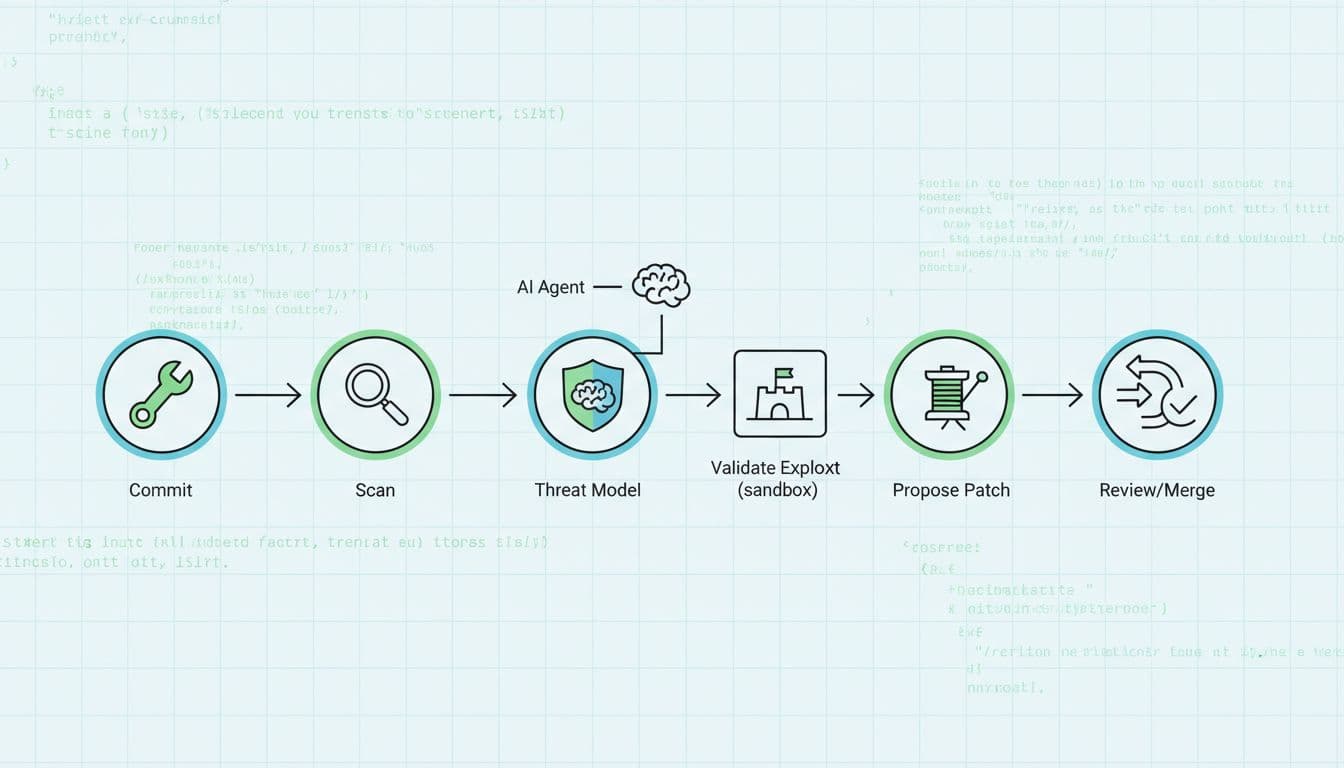
Aardvark is an autonomous AI agent built to act like a human security expert inside your engineering pipeline. It watches commits, pull requests, and code changes, then uses GPT‑5’s deeper reasoning to model potential threats and identify risky code paths. When it flags a defect, Aardvark attempts to reproduce it in isolation, measures the realistic impact, and drafts a targeted fix. Teams can review the patch, add tests, and ship with confidence.
Key Capabilities
- Continuous code scanning: Monitors repositories for insecure patterns, misconfigurations, and vulnerable dependencies.
- Threat modeling: Builds a contextual view of your architecture and security objectives to prioritize the most impactful risks.
- Exploit validation: Reproduces suspected flaws in a sandbox to reduce false positives and noise.
- Patch generation: Uses OpenAI’s coding agent to produce concise, reviewable fixes and test suggestions.
- SDLC integration: Fits into pull requests and CI/CD, so security reviews happen alongside normal development.
Why This Matters for Engineering Leaders
Most teams struggle to keep up with security debt. Reviews slip. Alerts pile up. Aardvark targets the gap between detection and action. By validating exploitability and proposing concrete fixes, it aims to cut triage time and help engineers stay focused. If it works as described, you could see fewer false positives, faster MTTR, and cleaner PRs.
That shift matters because many organizations have limited AppSec coverage, especially across multiple services. An agent that continuously reviews code and opens actionable patches can raise the security baseline without slowing feature work.
How Aardvark Compares
OpenAI is not alone. Google’s CodeMender, alongside commercial offerings like XBOW and other agentic tools, is pushing toward automated discovery and patching. The space is moving from static checks to end‑to‑end agents that test assumptions, validate real risks, and then propose changes tied to your code style and tests. Aardvark’s pitch centers on GPT‑5’s reasoning, plus a real‑time router to choose the right model behavior based on context and intent.

Early Results and Limits
OpenAI says Aardvark has been running on internal codebases and with select external partners, and that it helped identify at least ten CVEs in open-source projects. That is promising, but it is early days. Any agent that writes code must be measured on accuracy, test coverage, maintainability, and how often humans need to revise suggested patches. Security leaders will want to track precision, recall, noise reduction, and merge rates to prove value.
Another concern is over‑reliance. Teams should keep human-in-the-loop reviews, especially for design-level issues, auth logic, crypto, and data handling paths that carry high blast radius. Aardvark can accelerate the basics, but final accountability stays with the team.
Where It Fits in the SDLC
- Design: Use Aardvark’s threat modeling to catch risky assumptions before code is merged.
- Development: Run continuous scans on branches and pull requests; request patches directly in PR threads.
- Testing: Accept test scaffolds from Aardvark and expand with unit and integration tests that cover edge cases.
- Deployment: Block releases on validated critical issues; auto-open hotfix PRs with linked reproduction steps.
- Operations: Feed runtime findings and incident postmortems back into the agent for better future prioritization.
Practical Tips to Try on Day One
- Start with a representative service: Pick a repo that mixes web handlers, data access, and third-party libraries.
- Define guardrails: Set rules for patch size, coding style, and required tests for acceptance.
- Measure outcomes: Track false positives, time-to-fix, and the percentage of patches merged without rework.
- Pair with humans: Let senior engineers review early patches, then document patterns Aardvark should prefer.
- Close the loop: Feed production incidents and SCA results back into the agent to improve prioritization.
Security and Compliance Considerations
Before rolling out across all code, check data handling and access policies. Limit repository scopes, mask secrets, and log every action the agent takes. For regulated environments, capture evidence: when an issue was detected, how exploitability was tested, and what was patched. Keep SBOMs and dependency reports aligned with Aardvark’s remediation suggestions.

Aardvark points toward a future where security feedback is continuous, contextual, and actionable. If it keeps false positives low and patches are tight, teams can fix more flaws earlier, without heavy process overhead. Competitors are racing in the same direction, which is good for users. Expect fast iterations, tighter CI/CD integrations, and more specialized models tuned for common stacks.
For now, the smart move is to pilot Aardvark on a single service, measure the results, and expand based on evidence. If your team fights alert fatigue or security backlog, an agent that validates exploits and drafts clean patches could make an immediate difference.
To contact us click Here .