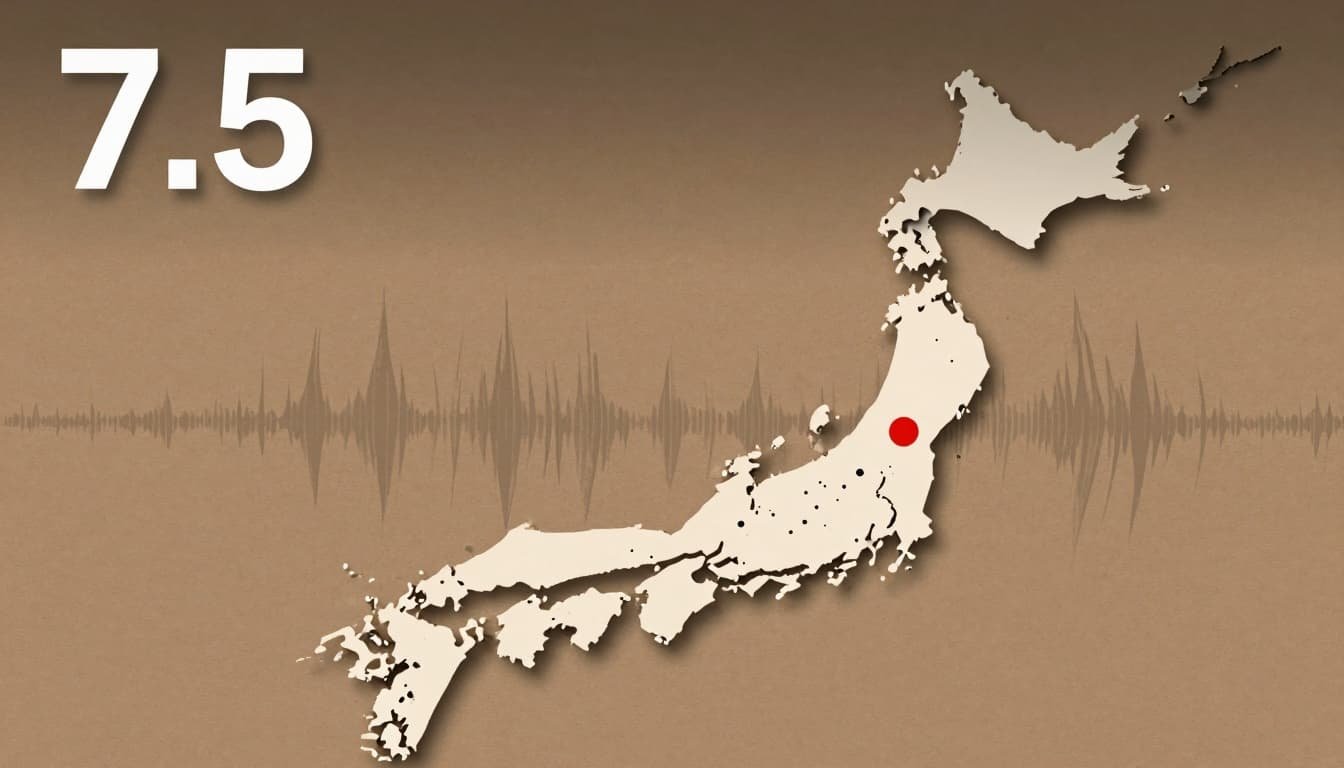
A strong magnitude 7.5 earthquake struck northern Japan on Monday night, injuring at least 30 people and forcing tens of thousands to leave their homes. The late-night quake shook buildings across the region, cut power to thousands of houses, and disrupted transport, while authorities urged people to stay on alert for more tremors in the coming days.
In this article, we look at what happened, how people were affected, the current safety status, and why experts say Japan must stay prepared for even larger quakes in the future.
When And Where The Earthquake Hit
The Japan Meteorological Agency (JMA) reported that the earthquake struck at 23:15 local time (14:15 GMT). It was recorded at a depth of around 50 km (31 miles) and occurred about 80 km off the coast of the Aomori region in north-eastern Japan.
Because of the strength and location of the quake, tsunami warnings were issued shortly after it hit. Waves of about 70 cm (27 inches) were later observed, but the warnings have now been lifted.
Even though the tsunami waves were not very high, authorities moved quickly, as Japan has painful memories of past quakes and tsunamis that caused huge loss of life.
Injuries, Evacuations, And Local Impact
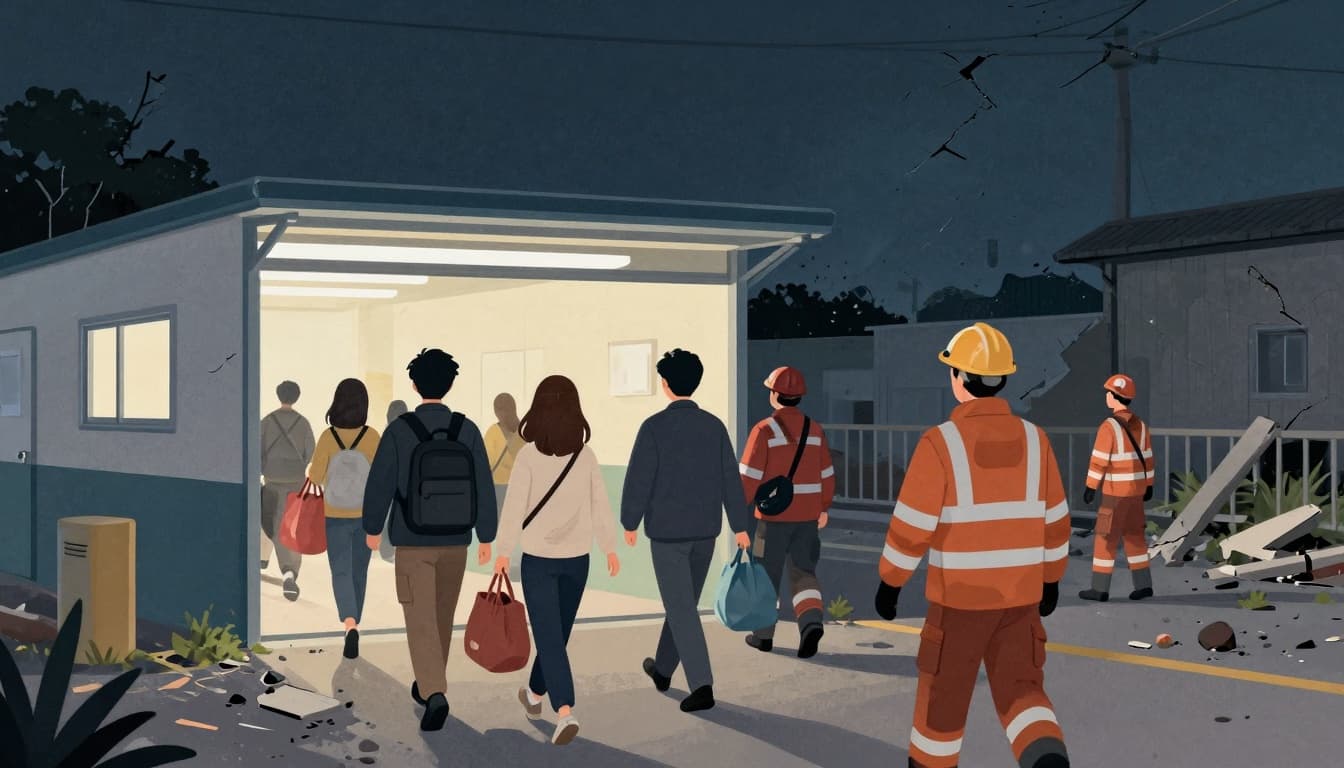
At least 30 people were reported injured after the earthquake, according to local media. Several of the injuries came from falling objects, broken glass, and people trying to escape shaking buildings.
Authorities issued evacuation orders for about 90,000 residents. Many people left their homes late at night and moved to schools, community centers, and other safe buildings on higher ground.
The Aomori prefectural government said that around 2,700 homes lost power after the quake. For those affected, this meant spending the night in the dark, with heating and some services disrupted.
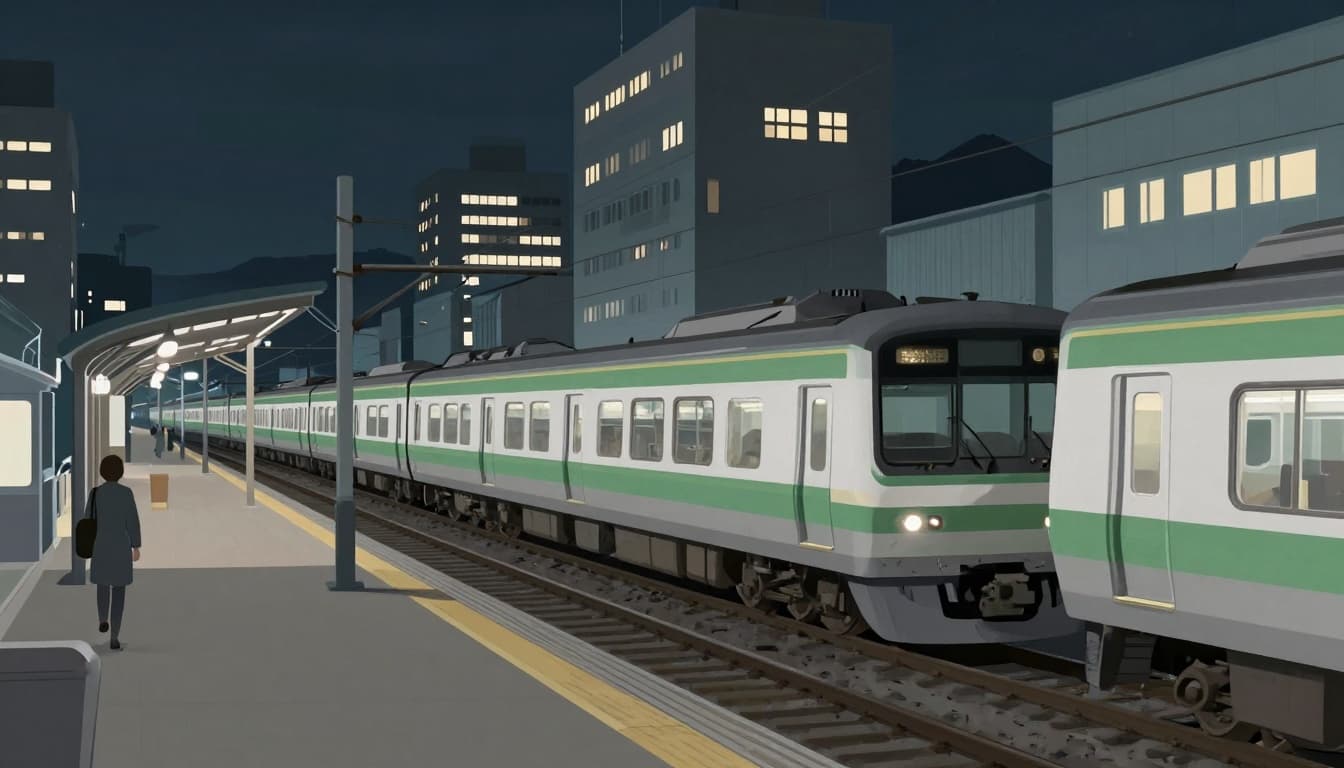
On top of this, East Japan Railway suspended some train services along the north-eastern coast as a safety measure. Rail operators in Japan often halt or slow trains after strong quakes to check tracks, bridges, and tunnels for damage.
Government Response And Safety Checks
The Japanese government set up a response office inside the prime minister’s crisis management center soon after the quake. Chief cabinet secretary Minoru Kihara said that an emergency team had been convened and that the government was working hard to:
- Assess damage in the affected areas
- Support local authorities
- Carry out rescue and relief operations where needed
Prime Minister Sanae Takaichi addressed citizens and urged people to review their earthquake safety plans. She reminded residents to secure furniture in their homes and to be ready to evacuate quickly if they feel strong shaking again.
Nuclear Power Plants And Safety Status
Given Japan’s history with nuclear incidents after earthquakes, one of the first questions many people had was about the safety of nuclear power plants in the region.
Tohoku Electric Power, the company that runs the Higashidori and Onagawa nuclear plants, said that no irregularities were found at their facilities. Japanese authorities also reported no problems at the Fukushima nuclear power station, which is still in the process of decommissioning after the 2011 disaster.
The International Atomic Energy Agency (IAEA) confirmed that it had been informed of the situation and that no safety issues had been detected at nuclear sites after this latest quake.
Power Cuts And Transport Disruption
Power companies and rail operators often act quickly after major quakes, sometimes before full damage reports are available. Switching off parts of the grid or pausing services can prevent accidents, fires, or derailments if hidden damage is present.
In this case, thousands of homes spent part of the night without electricity. For many residents, this meant relying on flashlights, battery-powered radios, or smartphones for updates.
Train suspensions affected people trying to return home late at night or travel early the next day. Japanese rail systems are known for their safety, and strict checks after earthquakes are a key part of that reputation.
Japan’s Long History With Earthquakes
Japan is one of the most earthquake-prone countries in the world. It sits on the “Ring of Fire,” a zone around the Pacific Ocean where many of the world’s earthquakes and volcanic eruptions take place.
The country experiences around 1,500 earthquakes every year, most of them small. However, some quakes are powerful and can cause widespread damage, especially if they trigger tsunamis.
On 11 March 2011, a massive magnitude 9.0 earthquake struck off Japan’s eastern coast. It triggered a huge tsunami that swept over the main island of Honshu, killing more than 18,000 people and destroying entire towns. That disaster also led to the Fukushima nuclear accident, which still affects policy and public opinion today.
Risk Of Future Megaquakes
Earlier this year, Japan’s earthquake investigation panel warned that there is a 60% to 90% chance of a “megaquake” occurring in the Nankai Trough within the next 30 years. The Nankai Trough runs along Japan’s Pacific coast and has been the source of large earthquakes in the past.
In worst-case scenarios, experts say such a megaquake could cause trillions in damage and potentially kill hundreds of thousands of people if it triggers a large tsunami and hits densely populated areas.
This is why Japan spends heavily on:
- Strict building codes to help structures withstand strong shaking
- Frequent emergency drills in schools and workplaces
- Tsunami warning systems and clear signposting of evacuation routes
- Public education on how to prepare for and respond to earthquakes
Staying Prepared And Informed
After the latest magnitude 7.5 quake, Japanese officials have asked people in the affected regions to stay alert for at least a week. There is a risk that strong aftershocks or another large tremor could occur.
Residents are encouraged to:
- Secure heavy furniture and appliances at home
- Keep an emergency bag ready with water, food, medicine, and important documents
- Know the nearest evacuation center and safe routes
- Follow updates from local authorities, the JMA, and trusted news sources
For people outside Japan, this event is a reminder of how vital preparation and clear communication are in disaster-prone regions. Strong building standards, fast alerts, and practiced evacuation plans can save many lives.
The magnitude 7.5 earthquake in northern Japan caused injuries, power cuts, and large-scale evacuations, but early signs suggest that the country’s strict safety systems helped limit the damage. Nuclear plants reported no irregularities, and tsunami warnings were lifted after only small waves were recorded.
Japan’s history shows how powerful earthquakes and tsunamis can reshape entire communities. As experts warn of possible future megaquakes, the focus remains on preparedness, strong infrastructure, and rapid response.
For now, authorities continue checking buildings, transport lines, and coastal areas, while residents stay alert for aftershocks and further advice from officials.
To contact us click Here .