
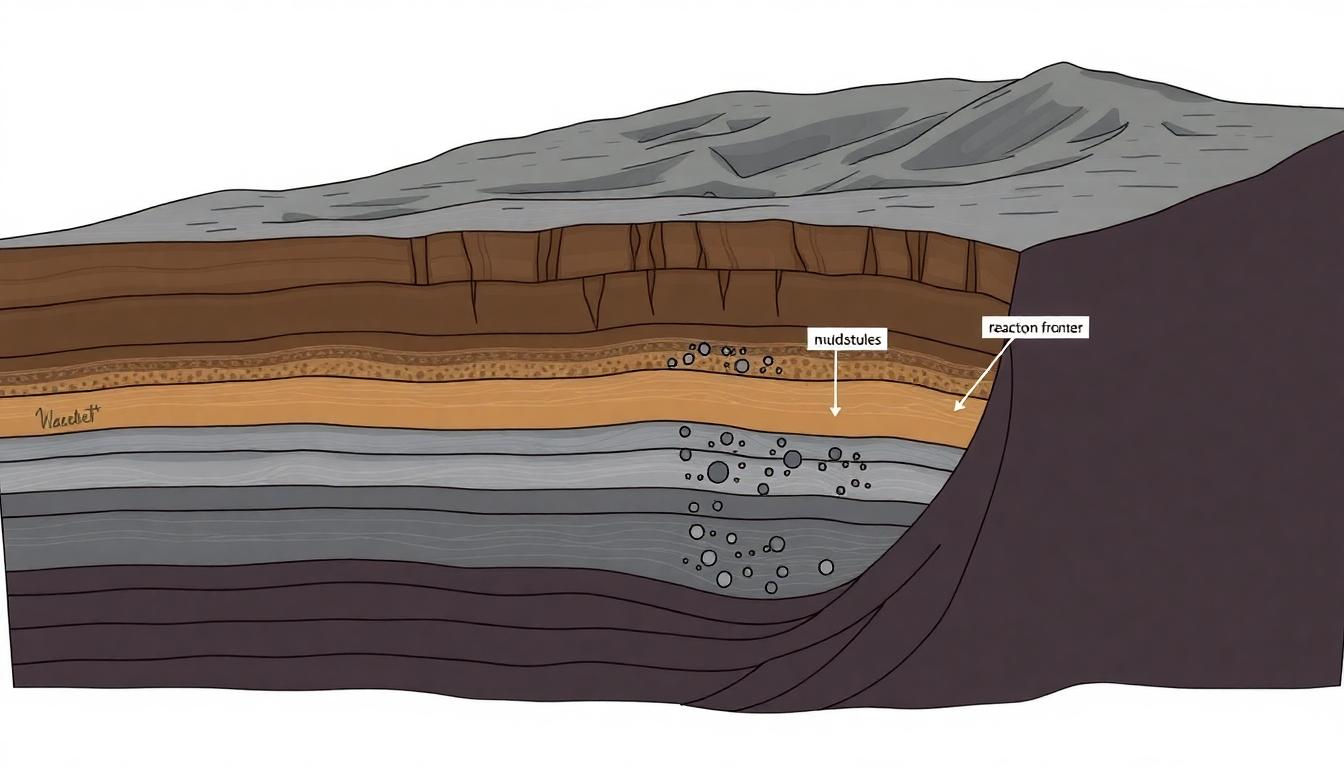
New results from NASA’s Perseverance rover work in Jezero Crater point to a tight connection between minerals and organic carbon in fine-grained sedimentary rocks. The study highlights small nodules and thin reaction fronts within mudstones that appear enriched in iron phosphate and iron sulfide minerals, likely vivianite and greigite. These features suggest redox reactions, the kind that shuffle electrons between compounds, took place after the sediments were laid down. That is important, because such reactions can preserve chemical fingerprints that help us judge ancient habitability on Mars.
Where the Story Unfolds: Jezero’s Western Fan
Perseverance has been exploring the ancient delta and surrounding units inside Jezero Crater, a site once filled by a lake and fed by rivers. As the rover entered Neretva Vallis on the crater’s western edge, it investigated outcrops of the Bright Angel formation. These rocks include mudstones and conglomerates that record quiet water deposition, followed by later geological changes. The textures here are ideal for trapping and protecting delicate chemical signals.
The rover’s instruments can map chemistry at submillimetre scales. That resolution matters. In sediments, big stories often hide in tiny zones where minerals grow, dissolve, or exchange elements. Those zones are exactly what the team reports: small nodules and narrow fronts where iron, sulfur, and phosphorus appear to concentrate alongside organic carbon.
Redox Reactions 101
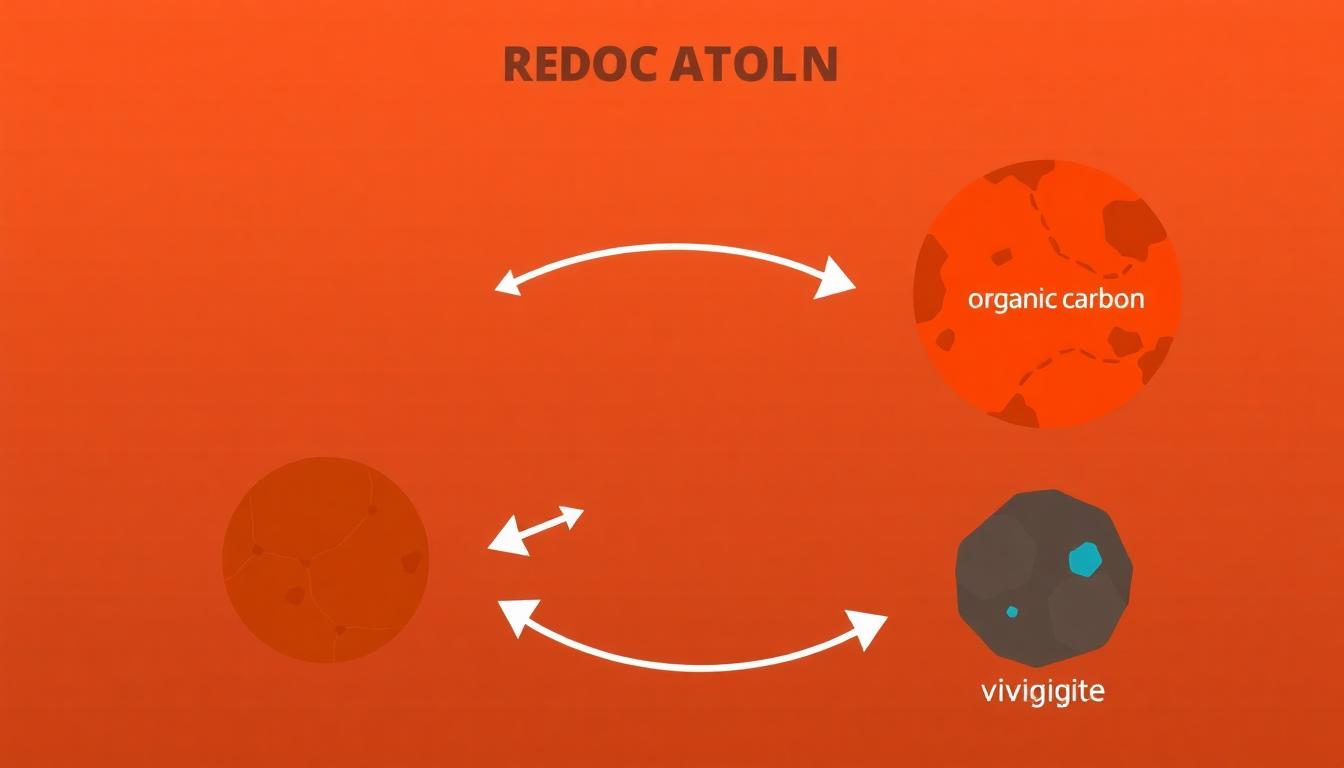
Redox reactions move electrons between compounds. On Earth, they drive key parts of the carbon, sulfur, iron, and phosphorus cycles in sediments. When organic matter reacts with iron and sulfur under low-oxygen conditions, it can encourage the formation of minerals like vivianite (an iron phosphate) and greigite (an iron sulfide). These minerals often grow near tiny fronts where chemistry shifts across millimetres.
The Jezero mudstones show that kind of pattern. The team interprets the mineral-organic associations as signs of post-depositional redox activity at low temperatures. That does not prove biology. It does show that the chemical environment had the right kind of energy gradients to support reactions that, on Earth, are sometimes tied to microbial processes.
Why Vivianite and Greigite Matter
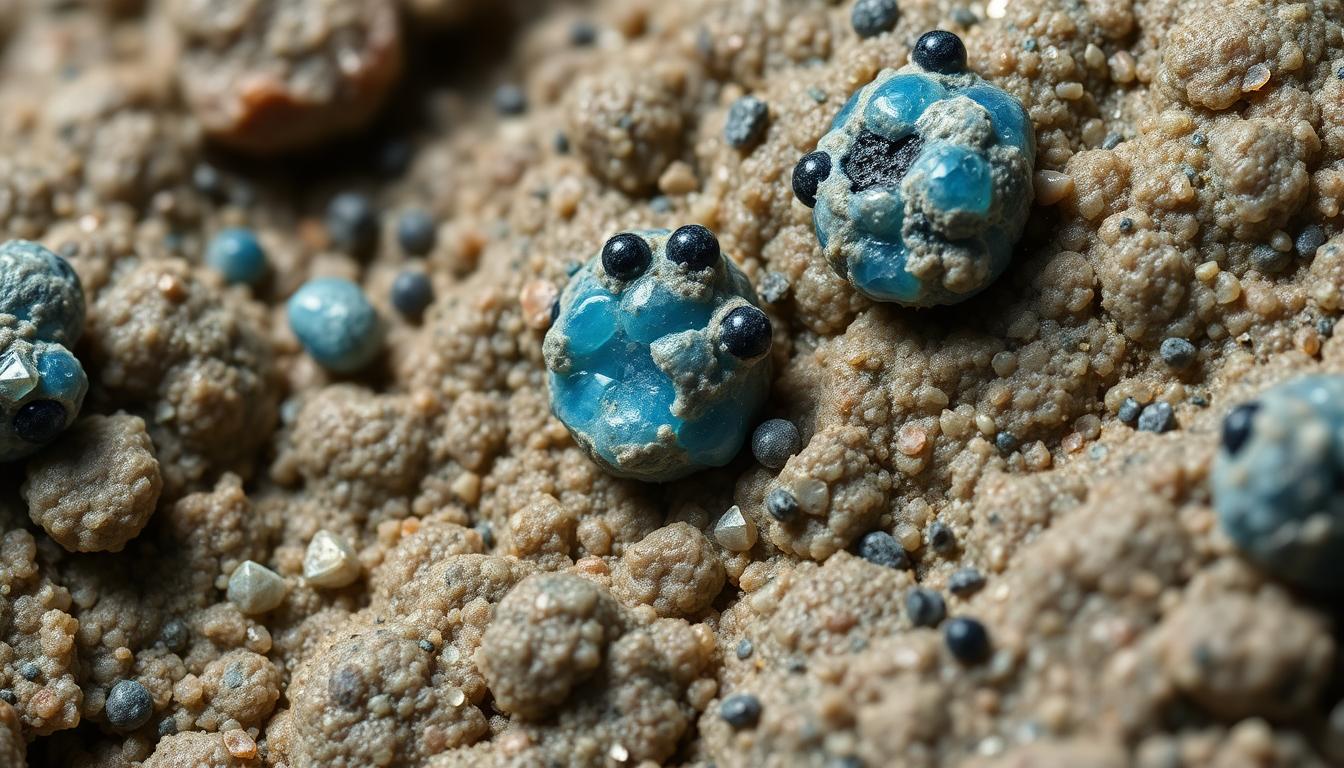
Vivianite can lock in phosphorus and record reducing conditions. It often shows a blue tint and forms where iron, phosphate, and organic carbon interact. Greigite is part of the iron sulfide family and can form during the stepwise transformation from poorly crystalline sulfides to pyrite. Together, these minerals can serve as markers of the redox path sediments followed after burial.
Finding textural associations between organic carbon and these minerals strengthens the case that Jezero’s fine sediments experienced chemical gradients that could preserve potential biosignatures. It also helps explain how phosphorus and sulfur moved through the rocks, which is central to understanding resource availability for any ancient microbial ecosystems.
Temperature and Timing
The mineral textures and geological context point to low-temperature formation. That is significant because low-temperature redox chemistry can preserve organic compounds better than high-temperature alteration. If heat had strongly overprinted the rocks, many delicate signals would be erased. Instead, the observed features hint that the mudstones retained a gentle alteration history, improving the odds that subtle chemical clues survived.
What This Does, and Does Not, Claim
The authors do not claim a biological origin for the organics or minerals. They present a geochemical framework that fits both abiotic and biotic pathways. On Earth, similar textures can form with help from microbes, but they can also arise through purely chemical means. The key takeaway is that Jezero’s sediments hosted the right kinds of redox processes to archive meaningful information about ancient water chemistry and potential habitability.
Why Sample Return Is Crucial
Rover instruments are powerful, but some measurements need Earth-based labs. High-sensitivity tools can identify organic compounds at fine scales, measure isotopes, and map mineral structures with higher precision. The team emphasizes that the core sample from this unit, if returned to Earth, could reveal whether the organics are biogenic, abiotic, or a mix, and clarify the exact pathways that formed vivianite and iron sulfides.
Broader Context: Jezero’s Evolving Story
Perseverance has already shown that Jezero includes igneous rocks altered by water, classic delta deposits, and flood layers. Layer by layer, the crater records changing water levels, sediment input, and chemical conditions. The new redox-focused observations add a missing piece: evidence that post-depositional chemistry reorganized elements at very small scales, creating mineral-organic pairings that are prime targets for biosignature searches.
How to Read These Results as a Non-Specialist
- Look for patterns, not single datapoints. Nodules and reaction fronts repeat across samples.
- Note the mineral mix. Iron phosphates and sulfides point to reducing conditions and active element cycling.
- Check the scale. Submillimetre textures are exactly where delicate signals hide and persist.
- Remember the limits. Redox chemistry sets the stage; proof of life requires more sensitive tests.
What Comes Next
Two paths move forward in parallel. On Mars, the rover continues to map textures, drill targets, and document context with images and spectroscopy. On Earth, scientists refine lab methods and plan analyses for when samples arrive. Together, these efforts can test whether Jezero’s organics and minerals formed through abiotic water-rock reactions, microbial processes, or both.
Jezero’s mudstones show mineral-organic associations that signal low-temperature redox activity after deposition. That chemistry concentrates iron, sulfur, and phosphorus alongside organic carbon in tiny zones that are ripe for biosignature work. It is a strong step toward understanding whether Mars once supported habitable environments, and it underscores why sample return is the key to answering the life question.
To Contact us Click Here .